Democratizing Intelligence: The Rise of Edge AI Solutions
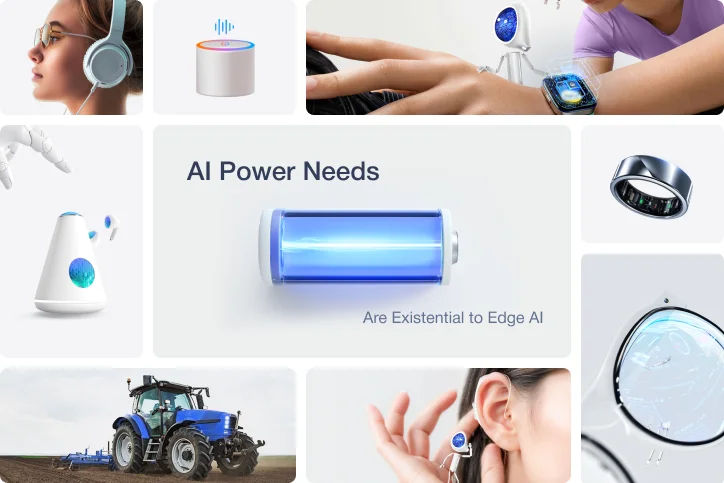
The landscape of artificial intelligence (AI) is rapidly evolving, with a notable shift towards decentralization. This democratization of intelligence is being fueled by the proliferation of edge AI solutions. Edge AI brings computation and data processing to the very edge of networks, closer to where the data is generated. Consequently, applications can leverage real-time insights, reduce latency, and enhance privacy.
Traditionally, AI models relied on centralized cloud computing, which often presented challenges related to bandwidth constraints, data security, and response times. Edge AI effectively solves these hurdles by processing data locally on edge devices such as smartphones, sensors, and industrial equipment.
- This paradigm shift empowers a larger range of organizations and developers to harness the power of AI, regardless of their technical expertise.
- Furthermore, edge AI opens doors to innovative applications in fields like autonomous driving, where real-time decision-making is critical.
The future of AI is increasingly distributed. Edge AI is poised to be a driving force in this transformation, enabling smarter, optimized systems across diverse industries.
Unleashing the Power of Edge Computing: AI at the Network's Edge
The rise of artificial intelligence (AI) has ushered in a new era of technological advancement. However, traditional cloud-based AI architectures face challenges in terms of latency and bandwidth constraints. This is where edge computing emerges as a game-changer, bringing the power of AI closer to the data of information. By deploying AI algorithms at the network's edge, we can achieve real-time insights and decision-making capabilities that were previously unimaginable.
Edge computing enables a distributed infrastructure, where data is processed locally on devices such as smartphones, sensors, and IoT gateways. This eliminates the need to send data back to a centralized cloud server, significantly reducing latency and improving response times. For applications that demand immediate reaction, such as autonomous driving or industrial automation, edge AI is essential.
Furthermore, edge computing boosts privacy and security by keeping sensitive data local. By processing information at the edge, we can minimize the amount of data that needs to be transmitted over the network, reducing the risk of data breaches and unauthorized access.
- Advantages of Edge Computing for AI include:
- Lowered Latency
- Improved Security
- Amplified Real-Time Insights
- Streamlined Data Processing
Edge AI: Transforming Industries with Real-Time Insights
Edge AI is revolutionizing industries by bringing computation capabilities to the very edge of the network. This paradigm shift enables real-time data interpretation, leading to faster decision-making and improved operational effectiveness. From healthcare, Edge AI is empowering businesses with actionable insights that drive innovation and optimize processes. By processing data locally, Edge AI reduces latency, improves reliability, and unlocks new possibilities for applications such as predictive maintenance
Pushing the Boundaries of Data-Driven Decisions
In today's data-driven world, businesses are increasingly reliant on processing vast amounts of information to make meaningful knowledge. However, traditional centralized methods can face limitations in terms of latency, particularly when dealing with real-time data. This is where edge intelligence comes into play, revolutionizing the way we interpret information by deploying intelligence closer to the point of data generation.
By performing computations and evaluations at the edge, platforms can respond in a more timely manner. This eliminates reliance on centralized infrastructure, enhancing performance and decreasing latency. Edge intelligence facilitates a wide range of applications, from smart cities to real-time analytics, by delivering faster, more reliable results.
The Future of AI is Decentralized: Embracing Edge Computing
The landscape of artificial intelligence (AI) is undergoing a transformative shift. Traditionally, AI relied on centralized cloud computing, where vast amounts of data were processed in large data centers. However, this paradigm is evolving as the benefits of decentralized processing, enabled by edge computing, become increasingly apparent. Edge computing brings computation and data storage closer to the origin of data generation, enabling faster response times, reduced latency, and enhanced privacy.
- By distributing AI workloads across a network of devices at the edge, we can reduce the dependence on centralized cloud infrastructure.
- Moreover, edge computing empowers real-time decision-making in applications that demand immediate feedback, such as autonomous vehicles and industrial automation.
- The convergence of AI and edge computing unlocks new possibilities for innovation across diverse industries, from smart cities to healthcare and manufacturing.
As the implementation of edge computing continues to accelerate, we can expect to see a more robust and flexible AI ecosystem.
Accelerating Decision-Making: The Impact of Edge AI
Edge AI is revolutionizing sectors by enabling real-time decision-making at the location of data generation. This shift from centralized processing to distributed intelligence empowers organizations to evaluate massive datasets locally, reducing latency and unlocking new possibilities for efficiency. By bringing AI capabilities closer to users, Edge AI fosters rapid response times, enabling companies to react quickly to changing conditions and make data-driven decisions in real time.
The benefits of Edge AI are far-reaching, spanning various domains such as healthcare. In manufacturing, Edge Ultra-low power SoC AI can be used to inspect production lines in real time, pinpointing potential issues before they worsen. In retail, it can personalize the customer experience by interpreting customer behavior and delivering targeted recommendations. In healthcare, Edge AI can enable telemedicine, allowing doctors to evaluate patient conditions remotely and offer timely interventions.
Constructing Intelligent Systems at the Edge: A Comprehensive Guide
The fusion of edge computing and artificial intelligence has spawned to a new era in innovation. Building intelligent systems at the edge presents both possibilities and rewards. This comprehensive guide explores the key elements of edge intelligence, presenting insights into integration, structure, and guidelines. From selecting the right hardware and software to fine-tuning model efficiency, this guide prepares you with the knowledge to create intelligent edge solutions.
- Deployment strategies
- Resource constraints
- Performance enhancement
Edge AI for Industry 4.0: Revolutionizing Manufacturing Processes
Industry 4.0 is continuously revolutionizing the manufacturing landscape, ushering in a new era of intelligent automation. At the heart of this transformation lies Edge AI, a paradigm shift that enables real-time decision-making at the point of operation. By deploying AI algorithms directly on sensors within the production environment, Edge AI eliminates latency and realizes unprecedented levels of efficiency and precision.
- Consider this
- {Edge AI-powered robots canlearn in real-time to maximize production processes, leading in increased productivity and reduced waste.
- Likewise, predictive maintenance powered by Edge AI facilitates early detection of potential equipment failures, preventing downtime and guaranteeing smooth operations.
As the manufacturing industry adopts Edge AI, we witness a expansion of innovative applications that are reshaping the way goods are manufactured.
Empowering Smart Devices with Edge AI Capabilities
The integration of artificial intelligence (AI) and edge computing is rapidly transforming the landscape of smart devices. By leveraging embedded AI capabilities, these devices can process data in real time, eliminating the need for constant connectivity to the cloud. This empowers a new era of advanced devices that can interact to their environment proactively. From smartsensors to wearablegadgets, edge AI is unlocking a world of opportunities for enhanced capabilities.
- Edge AI enables devices to adapt based on immediate data, leading to more accurate results.
- Minimized latency empowers real-time responses, crucial for applications like autonomousdriving.
- Improved privacy as data is processed locally, minimizing the transmission of sensitive information.
Security and Privacy in Edge AI: Addressing Critical Concerns
The rise of edge computing has ushered in a new era of artificial intelligence (AI), bringing computational power closer to data sources. Despite this, this paradigm shift presents novel challenges concerning security and privacy. Sensitive information processed at the edge risks vulnerabilities to malicious actors, while ensuring user privacy remains a significant hurdle. Implementing robust security measures, such as encryption and access control, is paramount to safeguarding critical data during transmission and storage. Furthermore, creating privacy-preserving AI algorithms that minimize data exposure is crucial in building trust and ensuring responsible use of edge AI.
- Several key considerations must be addressed to mitigate these risks. These include implementing secure communication protocols, establishing identity management systems, and conducting regular security audits. Additionally, educating users on best practices for protecting their data is crucial.
- Furthermore, policymakers and industry leaders must collaborate to develop comprehensive regulatory frameworks that balance innovation with security and privacy needs . This collaborative effort will be essential in fostering a secure and trustworthy ecosystem for edge AI applications.
Towards Cloud towards Edge: A Evolution of AI Deployment Strategies
Artificial intelligence (AI) has transitioned from a niche technology to an integral part of modern applications. This rapid growth has led to a shift in how AI is deployed. Traditionally, cloud computing served as the dominant platform for AI, offering scalability and unified resources. However, the rise of edge computing presents a compelling alternative. Edge deployment brings AI capabilities closer to applications, enabling real-time processing, reduced latency, and enhanced security. This shift offers a more expansive range of possibilities for AI applications, spanning fields like autonomous vehicles, industrial automation, and intelligent cities.
Ambiq – Ambient Intelligence
To enable intelligent devices everywhere to drive a more energy-efficient, sustainable, and data-driven world.
Facebook | Linkedin | Twitter | YouTube